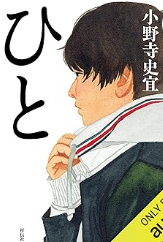













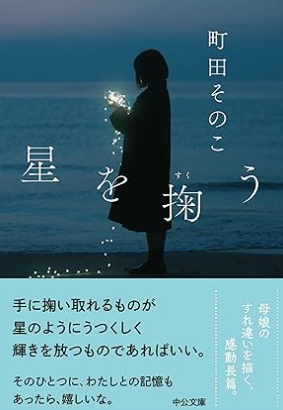
This is the story of Chizuru, a daughter abandoned by her mother, who reunites with her mother—now suffering from early-onset dementia—and seeks “forgiveness” and “rebirth” while confronting the wounds of the past. Although it tackles heavy themes such as domestic violence, dementia, and the complex, often painful bonds between mother and daughter, the book is highly acclaimed for the glimmer of hope that shines through at the end.
🌙 Synopsis
The protagonist, Chizuru Yoshino, was suddenly abandoned by her mother, Seiko, after a trip they took together during her childhood.
As an adult, Chizuru lived in fear, trying to escape her abusive husband, Yaichi.
Struggling financially, she submitted a story about her “only memory with her mother” to a radio program, hoping to win the prize money.
Following the broadcast, she was contacted by Ema Serizawa, a woman claiming to be her mother’s “other daughter.”
Guided by Ema, Chizuru reunited with her mother after twenty-two years, only to find her suffering from early-onset dementia; her mother could not even remember the reason she had abandoned Chizuru.
Chizuru began living communally at “Sazameki Heights” alongside her mother Seiko, Ema, and Ayako—another woman who had been abandoned by her family.
There, while still harboring resentment toward her mother, Chizuru gradually came to understand her mother’s vulnerabilities, her past, and the nature of her love.
Chizuru had long held a grudge against her mother as the person who abandoned her,
but as her mother’s dementia progressed, the truth came to light: her mother, too, had once been a daughter abandoned by her own mother.
The reason she had abandoned Chizuru stemmed from a mix of fear and twisted love: “I didn’t want to become a cursed mother like my own; I left to protect my daughter.”
The women of Sazameki Heights all shared histories of being hurt by their families, and they lived by supporting one another through their pain.
While her relationship with her dementia-stricken mother did not undergo a dramatic, perfect healing,
Chizuru chose not to aim for “fully forgiving her mother,”
but rather to “free herself from the life she had bound to her hatred of her mother.” In the end, Chizuru takes a step toward reclaiming her own life,
and the story draws to a close, leaving behind a sense of quiet hope.
⭐ Thoughts
The portrayal of the disconnect and eventual forgiveness between mother and daughter is incredibly delicate.
Contemporary themes—such as domestic violence, dementia, and the reality of young caregivers—are depicted with a realism that deeply resonates.
The warmth found in a “family not bound by blood” offers a sense of salvation.
At the same time, the story contains many heavy scenes—such as depictions of domestic violence and the progression of dementia—that can take an emotional toll.
It prompts deep reflection on questions like “What does it mean to forgive a parent?” and “What is family?”
Despite the heavy subject matter, the story leaves a heartwarming impression.
This is not merely a story about forgiving one’s mother; it is a story about breaking free from the past that holds one captive.
True to Sonoko Machida’s style, the book is imbued with a gentle, compassionate gaze toward people grappling with their own vulnerabilities,
leaving the reader with a moving sense of emotional release.