














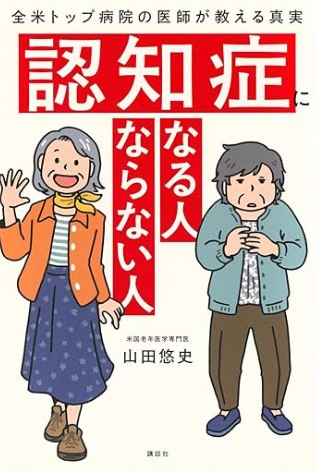
The Truth About People Who Develop Dementia and Those Who Don’t: A Doctor from a Top US Hospital
Yushi Yamada
(Key Points)
Dr. Yamada is a physician specializing in geriatric medicine at a general hospital in the United States.
In this book, he explains scientifically-based prevention methods from the perspective that “Dementia is not a matter of luck, but rather a disease whose risk can be significantly altered through lifestyle and medical care.”
- Dementia is Not a “Sudden Disease”
Dr. Yamada explains that dementia has a strong “lifestyle-related disease aspect,” developing as a result of years of accumulation of factors such as
vascular damage
inflammation
lifestyle habits
nutritional deficiencies
sleep disorders
lack of exercise
and other factors - The Difference Between People Who Develop Dementia and Those Who Don’t
Dr. Yamada clearly shows the lifestyle habits that influence the risk of dementia, based on the latest medical research.
Characteristics of people prone to dementia:
High blood sugar levels
Lack of exercise
Poor sleep quality
Diet centered on processed foods
Social isolation
Smoking and excessive alcohol consumption
Characteristics of people less prone to dementia:
Moderate exercise (especially aerobic exercise + strength training)
Quality sleep
Balanced diet (similar to the Mediterranean diet)
Social connections
Cognitive stimulation such as reading and learning
Management of blood pressure, blood sugar, and cholesterol
- Scientifically-Based “Priorities of Prevention”
A key feature of this book is its clear indication of “what to start with”.
Dr. Yamada emphasizes “high-priority preventive measures”:
Blood pressure management (especially in middle age)
Exercise habits
Hearing care (importance of hearing aids)
Social connections
Improved sleep
The point that “hearing loss increases the risk of dementia” is a fresh perspective for many readers. - Common Misunderstandings and Pitfalls in Prevention Among Japanese People
Supplements Alone Cannot Prevent Problems
Exercise is More Effective Than Brain Training
Excessive Carbohydrate Restriction Can Be Counterproductive
“Overall Lifestyle Balance” is More Important Than “Brain-Friendly Foods”
This book carefully corrects these and other commonly misunderstood health information.
Impressions
- Clear and Reassuring Scientifically Correct Prevention Methods
Dr. Yamada bases his recommendations on the latest research in the United States,
and carefully selects and introduces only preventative measures with strong evidence.
Amidst the mix of reliable and unreliable health information on the internet,
the book’s appeal lies in the fact that much of the content feels trustworthy. - Easy to Incorporate into Daily Life
Walk for 30 minutes a day
Go to bed early and wake up early
Talk to friends
Measure your blood pressure
Consider hearing aids
There are many things you can start doing today.
The absence of difficult diets or extreme health methods is also a positive point. - Much Advice Tailored to the Japanese Lifestyle
Despite being an American doctor,
the book is easy to read because it is written in a way that is easy for Japanese readers to implement.
In particular, the explanations are thorough, taking into account the Japanese diet, the Japanese healthcare system, and the living environment of the elderly in Japan.
- This book changes the image of dementia as a “frightening disease.”
Reading this book gives you a positive feeling that dementia is a “preventable disease” and that the future can be changed if measures are taken early.
The content will resonate especially with those who have experience caring for family members.
Yamada’s book shows the “correct priorities” for dementia prevention, backed by scientific evidence.
Its greatest appeal is that it clearly explains what to do, what not to do, and where to start, making it easy to apply to daily life.