

















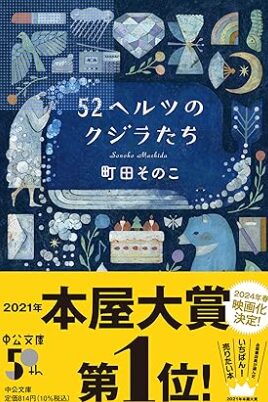
●Synopsis
・The protagonist of this story is Kiko Mishima.
Continually exploited by her family and worn down emotionally, she moves from Tokyo to a seaside town in Oita as if to break away from her past.
There, she meets a 13-year-old boy who was abused by his mother and called “Mushi” (a bug).
He has closed his heart and lost his voice.
Kiko sees a glimpse of her own past in the boy.
As atonement for the voices she missed, she decides to help him.
・The boy’s name is “52.”
The boy has even had his own name taken away from him.
Kiko begins to call him “52” (Gojuuni).
This is a reference to the “52 Hertz Whale,” whose voice cannot be heard by its companions.
・Kiko’s Past
Kiko has been exploited by her family for many years and has been bound by the words “because we’re family.”
Her only salvation is a transgender man named Ann (Okada Ango).
He is the one who taught Kiko that it’s okay to run away.
However, Ann goes to great lengths to protect Kiko, ultimately costing her her life.
・ Confrontation with the Boy’s Mother
In order to protect 52,
Kiko confronts his mother, who has been abusing him.
Her mother justifies her actions, telling her, “This boy is an insect.”
Though filled with anger and sadness, Kiko decides to run away with 52.
・ A Story of Rebirth
52 gradually opens up, and Kiko, in turn, begins to connect with others again.
Towards the end of the story, 52 finally regains his voice and calls out to “Kiko.”
This symbolizes the moment when the voice of the world’s loneliest whale finally reaches someone.
● Impressions
- The metaphor of the “frequency of loneliness” is beautiful.
The idea of using the real-life 52-Hz whale as a symbol of “people with voices that no one else can hear” is brilliant.
It makes you feel like there is a “52-Hz voice” within each of us. - Sharp contemporary themes: Abuse, Exploitation, and Young Carers
The work directly addresses social issues such as familial exploitation, child abuse, prejudice against transgender people, and loneliness.
The moment when we discover that Ann is transgender was particularly shocking.
However, despite the heavy theme, the careful depiction of “salvation” leaves a warm impression after reading. - The relationship between Kiko and 52 is neither “parent-child” nor “romantic.”
The two understand each other’s pain and comfort each other.
The message that it is “chosen connections,” not blood ties, that save people is powerful.
At the same time, it raises questions about whether it is possible to extend such a helping hand to others in the real world. I think the love that Kiko has for 52 and the love that Ann has for Kiko are particularly powerful.
Some readers will probably say that “things don’t always work out this well in reality.”
However, even though it deals with the heavy theme of “a story of a lonely soul who finally finds someone she can reach,” I think it is a work that gives readers the courage to “live life again.”