
















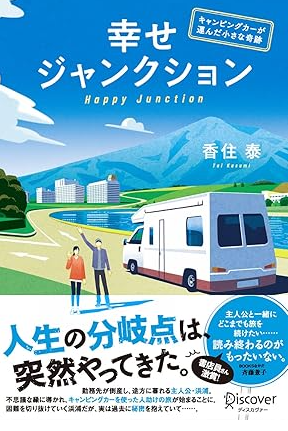
Happy Junction by Yasushi Kasumi
Synopsis
The protagonist, Hamaura, is a 60-year-old former transportation company employee. After his company suddenly goes bankrupt, he inherits a camper van in lieu of his severance pay. This marks a turning point in his life, and he embarks on a journey in his camper van.
During his journey, he encounters a diverse group of unique characters.
- Tachibana, a 28-year-old woman who joins him through a series of unexpected events.
- Mrs. Setagawa, a kind grandmother.
- Kurokawachi, a man in a blue suit with a difficult past.
- Yukiya, a boy who lost his mother at a young age, and his companion dog, Squash.
By interacting with strangers, Hamaura helps them feel at ease and sometimes provides them with life-changing experiences.
Review
- Turning Point and Rebirth
The protagonist, Hamaura, loses his company at the age of 60, and finds himself at a turning point in his life. The journey that begins there is a process of reexamining one’s past and searching for a new way of life. It gives readers hope that life can always be restarted, regardless of age or circumstances. - Encounters and Bonds
The people the protagonist meets along the way each carry their own worries and loneliness. Through their interactions with Hamaura, they gradually open up and change. Connecting with others can heal people and give them the strength to move forward—this “power of bonds” is at the heart of the story. - Small Miracles and Kindness
This novel lacks flashy drama or dramatic plot twists. Instead, it carefully depicts small miracles found in everyday life and often-overlooked kindnesses. Through the characters’ transformations, readers will feel a deep warmth in their hearts, and after reading, they may feel a little more positive about life. - Rethinking the Definition of “Happiness”
What is “happiness,” as the title suggests? Perhaps it lies not in money or success, but in relationships between people and living life to the fullest. Hamaura’s journey quietly asks the reader what “true happiness” is. I felt it was similar to Kitagawa Yasushi’s novels.