

















Synopsis
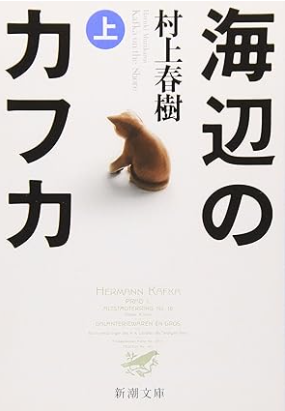
・Kafka (Young Boy) Part
Kafka grew up hearing a curse-like prophecy from his father: “You will kill your father and sleep with your mother and sister.” To escape this fate, he runs away from home from Tokyo to Shikoku.
In Shikoku, he meets Oshima (an intelligent, androgynous librarian) and Saeki (the woman who runs the library and may be Kafka’s mother). Kafka takes refuge in the library and begins a quiet life there.
While he is running away from home, Kafka’s father is murdered in Tokyo.
Though Kafka has an alibi, he is consumed by the fear that he may have committed the murder. In a dream, he feels as if he has stabbed his father.
Saeki lost her lover at a young age and has lived as if time has stopped since that loss. Kafka is attracted to her, and she in turn feels a complex mix of maternal and romantic feelings for him. However, there is no definitive answer as to whether Saeki is Kafka’s mother.
・Nakata (Old Man) Part
Nakata lost part of his intelligence in a mysterious wartime accident, but in exchange gained the ability to communicate with cats.
Johnny Walker (likely the same person as Kafka’s father) is an abnormal being who kills cats, and Nakata stabs him to death in an attempt to stop him.
This incident is depicted as being linked to the death of Kafka’s father.
Nakata senses that “something that should not have been opened has opened,” and heads to Shikoku with truck driver Hoshino.
In Shikoku, Nakata finds a place like a “rift in the world” and closes it, completing his role. He then quietly passes away.
・Core of the Story
It’s highly likely that Nakata committed the murder of Kafka’s father.
Kafka is “influenced” by the murder through his dreams and otherworldly realms.
Saeki is likely Kafka’s mother, but this is never explicitly stated.
Kafka travels to otherworldly realms to overcome the “curse” and establish his identity.
Nakata’s journey is like a “ritual” to maintain the balance of the world.
Impressions
- The way the “boundary between dream and reality” is depicted is fascinating.
The story is structured as if half reality and half symbols and dreams.
The reader is constantly left wondering, “Is this reality? Is this symbolism?”
This ambiguity is what makes the work so appealing, but also what makes it so difficult to understand. - Kafka’s coming-of-age story, Nakata and Hoshino’s “road movie” is a satisfying read.
The theme of a boy burdened with his father’s curse, his mother’s absence, and loneliness—choosing his own story—resonates strongly.
Also, Nakata and Hoshino’s parts are warm and humorous, soothing to the reader. Hoshino’s growth is also quietly moving. - Many mysteries and unexplained details
Saeki’s true identity and the consequences of his murder are never clearly explained.
People who enjoy the ambiguity of stories will find it interesting, but I found it difficult to understand.