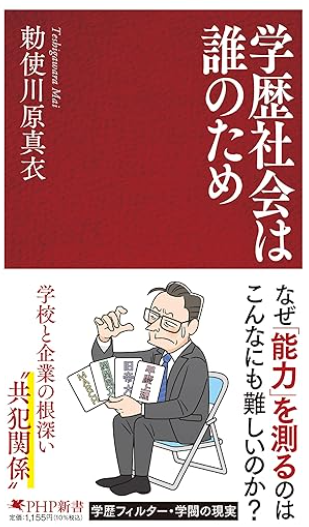



















Overview of the Content
This book is a social critique that re-examines the “inequality” and “meritocracy” prevalent in modern society by questioning the true nature of the word “status.”
As an organizational development expert, the author carefully unravels the “unconscious privilege” lurking in the values of companies, schools, and individuals.
Main Themes
- What is “Status”?
This book questions how a “view of humanity” based on superiority, inferiority, and hierarchy creates social division.
- The Pitfalls of Meritocracy
This book reveals how seemingly positive terms such as “culture fit,” “adaptability,” and “independence” actually create structures that lead to exclusion and difficulties in life.
- The Other Side of the Norm of “Living a Better Life”
This book examines who is saved and who is left behind by modern “rightness” such as “self-esteem,” “well-being,” “reskilling,” and “type.”
- Re-examining societal norms through 20 questions
This book fundamentally questions everyday terms such as “divide,” “ability,” “personal responsibility,” “growth,” “dialogue,” and “benefits.”
Particularly striking points:
- “Dividing, understanding, sharing”
“Dividing” leads to understanding, but depending on how it’s done, it can also lead to discrimination.
- “Ability”
Ability is influenced by “compatibility” and “environment,” yet it’s often blamed on the individual.
- “Versatile”
Versatility is a fine line between versatility and “mediocrity,” pointing out the dangers of the trend towards seeking omnipotence.
- “Personal responsibility”
It argues that before shifting responsibility onto individuals, relationships and structures need to be re-examined.
📝 Impressions
- A Sharp Perspective That Questions “Common Sense”
The appeal of this book lies in its ability to re-examine words we use casually every day—
“growth,” “independence,” “benefits,” “versatility”—from the perspective of “for whom are these words beneficial?”
It naturally makes you consider whether you are unconsciously using the “logic of the strong.” - Carefully Depicting the “Shadow” of Meritocracy
The values of “hard work pays off” and “one should continue to grow” seem positive at first glance, but
the author clearly shows the exclusion, anxiety, and self-responsibility that lie beneath them.
This is highly insightful when considering the problems of modern work styles and education. - Realism Unique to an Organizational Development Expert
Because the author knows the realities of corporate culture and performance evaluation,
the “actual usage” of words like “culture fit” and “versatility” is realistically depicted.
It’s not just social criticism, but also full of practical insights.
This provides an opportunity to pause and re-examine the values we have believed in, such as educational background, ability, personal growth, and self-responsibility.