


















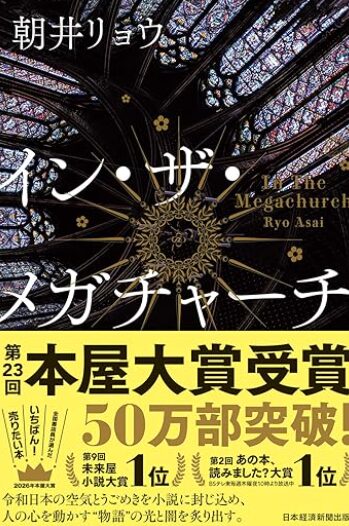
This extremely realistic novel depicts the process by which the lives of three characters crumble, centering on “idol activities” and “dependence on narratives.” The three parties—”those who orchestrate the idol activities,” “those who become obsessed with the idol,” and “those who lose their idol and spiral out of control”—are drawn into a massive “narrative device = megachurch.”
🌀 Synopsis
The story unfolds from the perspectives of three characters.
- Kubota — Works at a record company. Invited by a talented producer colleague, he joins an idol group’s “special strategy room.”
What he discovers there is “church marketing”, which analyzes fan psychology and manipulates fandom through narratives.
- Sumika — An introverted university student. She feels that the idol Kakihana Michiya, whom she coincidentally meets, speaks for her own vulnerabilities, and becomes engrossed in idol activities.
Her actions escalate, including lying to her father to withdraw money and using 50 university PCs to boost video views.
• Ayako Sumikawa — A devoted fan of actor Rintaro Fujimi. Unable to accept her idol’s sudden death, she and her friends become engrossed in conspiracy theories.
The lives of the three intersect at Shibuya Crossing, reaching a “critical point” where their enthusiasm and loneliness escalate to their limits.
🔍 Impressions
- Realistic and frightening
The structure of idol fan activities, the fervor of fandom, and the descent into conspiracy theories are so closely tied to real-world events that it sends chills down your spine. - The sharp duality of “narrative”
Stories can save people, but at the same time, they control them and rob them of their perspective.
This theme is depicted in a three-dimensional way through the lives of the three characters. - A work that leaves you with “pain” rather than empathy
The process by which the loneliness and anxiety that everyone experiences are amplified in the form of idol fan activities is vividly portrayed.
The strong feeling after reading it is that “this is not someone else’s problem.” - Closer to contemporary criticism than a novel
The narrative, which analyzes the structure of modern society through themes such as fan activities, social media, marketing, and religiosity, is often described as essay-like.
📘 Summary
“In the Megachurch,” while using fan activities as its theme, is a work that confronts the universal question:
“Why do people seek solace in stories, and why do they become controlled by them?”